
A game does not become social because it has chat, a Discord server, or a share button. Those features make communication possible. They do not give anyone a reason to bring another person into the game.
The useful question is smaller: what can one player do only because a friend joins, helps, gifts, or returns? If the answer is vague, the social feature is probably another place to post. If the answer changes a purchase, session, reward, or relationship, the game may have a real growth loop.
That distinction matters because social reach is easy to imitate and hard to operate. A studio can add an invite reward quickly, but it cannot force the invitation to feel timely, useful, or welcome. Social growth depends on the recipient understanding why they are needed now and reaching that moment before the original player’s enthusiasm expires.
AC&A read: social growth starts when a player has a useful role in someone else’s experience. Count the new shared behaviour, not the number of invites sent.
One Friend Can Change the Purchase Decision
In a GameMakers interview with BisectHosting founders Max Podkidkin and Andrew Blatchford, the clearest growth claim is not about server hosting. It is about the moment a game becomes worth buying because someone else wants to play it with you.[1]
The founders see players add multiplayer to games that were designed for solo play. Their advice is not to bolt co-op onto every game. It is to notice when players are already spending their own time on mods, private servers, repeated co-op requests, or workarounds. That effort is stronger evidence than a generic survey answer because players are already putting in the work.
A friend’s recommendation works when it contains a plan. “Buy this” is weak. “Buy this so we can run the dungeon tonight” includes a session, a role, and another person who will notice whether you arrive. The game has turned word of mouth into a playable commitment.
The full GameMakers conversation covers when player-made multiplayer is a useful demand signal, when it is not, and the technical work studios underestimate:
Social Growth Starts After the Invite
Studios often measure the easiest step: shares, invite sends, Discord joins, or account links. Those numbers show that a message moved. They do not show that a relationship improved the game.
Naavik’s analysis of Discord’s developer push is useful because it separates Discord’s large gaming audience from the products developers can actually use. The company now sells a social SDK, rewarded Quests, and commerce around the same core promise: shorten the distance between a conversation and a game action.[2]
Discord reports a 34% median retention increase for linked players compared with unlinked players, plus 25% more game-launch days, in a causal study across more than 15 games launched since December 2024.[3] Those are first-party results for players who linked accounts, not a guarantee for every integration. The useful product clue is the path: friends list, presence, invites, text, and voice are available where the session forms.
Do not copy the integration and expect the lift. Map the actual breakpoints first:
- Can a player tell which friend is ready to play now?
- Can the friend accept without searching for a server, code, or mode?
- Does the group have a short activity that starts before attention drifts?
- Can the relationship continue after the session without a fresh setup?
The product work lives between intent and play. A share button at the beginning of that gap does not close it.
A Friend Can Help Without Becoming a Player
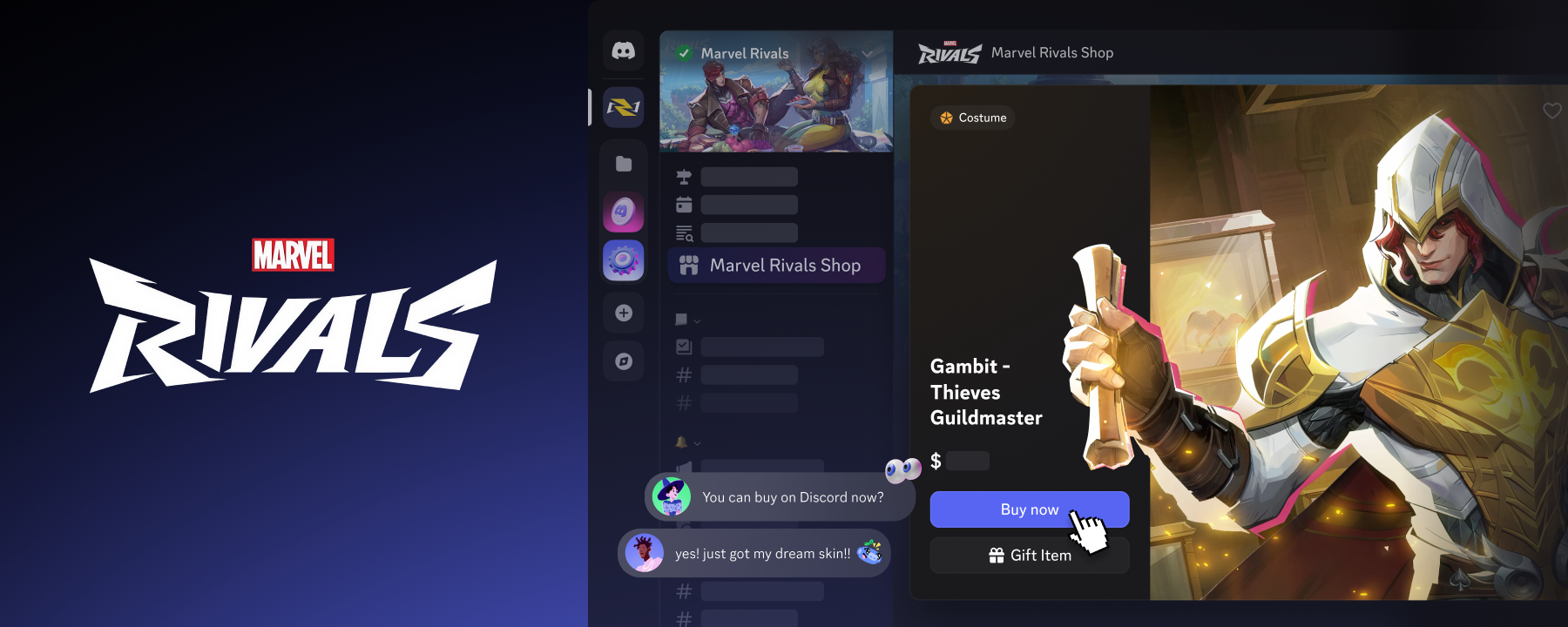
Social growth does not always require another install. In Discord’s Marvel Rivals case study, 41% of purchases through its social-commerce pilot were gifts, and 12% of gift buyers did not play the game.[4] A friend could participate in the relationship without first becoming a conventional user.
That distinction expands the jobs a friend can do:
- Recruit: bring someone into a specific session.
- Help: complete a group goal or unblock progression.
- Gift: add value without taking over the recipient’s choice.
- Return: give a lapsed player a reason to come back now.
Each job needs its own measure. Recruitment is not successful at send; it is successful when the invited player reaches the promised activity. A gift is not successful at purchase; it is successful when the recipient claims it and the moment strengthens play rather than creating obligation or confusion.
The non-player buyer also changes economy design. A wish list must explain the item clearly to someone who lacks the game’s context, while the recipient still needs control over what enters their account. The friend should be able to contribute without accidentally buying the wrong platform item, duplicating ownership, or creating a reward that cannot be claimed.
Crossovers Need Shared Behaviour, Not Just Shared Art
The Duolingo and Brawl Stars collaboration shows the same rule across two products. GameRefinery’s analysis notes that the partnership used shared mechanics, social tasks, and rewards in both apps instead of stopping at character appearances.[5]
Supercell’s official event page describes a boss fight built around answering language questions, community goals announced through social channels, and additional rewards earned by completing a Brawl Stars quest inside Duolingo.[6] The collaboration gave each audience something to do in the other product.
A crossover becomes a growth loop when the partner’s audience can carry progress home. A mascot swap may earn attention. A connected task gives players a reason to install, return, or coordinate, then makes the result visible in the product they already value.
Do Not Build Multiplayer From a Slogan
“Make it social” is not a feature brief. Multiplayer adds hosting, matchmaking, abuse prevention, moderation, support, latency, permissions, and an obligation to keep the group experience working. The GameMakers interview is valuable because its guests sell hosting and still name games that should remain solo.
Look for player effort before committing. Are people already organising shared runs, building mods, trading gifts, teaching friends, or returning because a group expects them? Then test the smallest version of that behaviour. A short co-op task may reveal more than a permanent guild. A wish list may reveal more than a new store. A deep link into one activity may reveal more than a broad Discord integration.
This is narrower than our earlier argument that communities grow when players can shape the product. That article concerns feedback, creation, and product decisions. The friend loop concerns one player changing another person’s next action. It also extends Player Signal Is the New UA Advantage: repeated friend-to-friend effort is one of the clearest signals a team can observe before buying scale.
A Five-Step Friend-Loop Gate
- Name the relationship: existing friend, guildmate, creator, lapsed player, or non-player gift buyer.
- Name the job: recruit, help, gift, teach, challenge, or return.
- Remove the handoff friction: take the recipient directly to the promised activity, not a home screen.
- Protect the experience: plan for moderation, matchmaking, support, and failure when another person is now part of the promise.
- Measure the shared outcome: first session, repeat session, claimed gift, successful group goal, or lapsed-player return—not just sends and joins.
The best social feature does not ask players to promote the game. It gives them something worth doing with another person. When that action is useful, the recommendation becomes part of play. When it is not, the invite is just another notification competing for attention.