
Most game community growth plans still treat the community as a communication channel. A studio posts updates, answers support questions, runs a Discord, and hopes that enthusiasm turns into retention or word of mouth.
That leaves most of the value on the table. Players do more than receive information. They teach each other, expose confusing design, invent new ways to play, create content, and show which parts of the game deserve more attention.
Game community growth begins when player activity can change a product decision. That does not mean handing the roadmap to the loudest fans. It means giving the community a defined job inside the game, then using judgment about what to build, protect, or ignore.
AC&A read: a large audience is not automatically a useful community. The useful community is the one that helps other players understand the game, gives the team better evidence, or creates new reasons to return.
Community Needs a Job Inside the Product
A PocketGamer.biz article by Nordcurrent CMO Ada Mockute Jaime argues that community now operates at both ends of a game’s growth path: players encounter the game through trusted voices, then stay because discussion, strategy, and shared identity continue after install.[1]
The useful detail is not the funnel language. It is the example from Airplane Chefs. Nordcurrent found a player named Rachel whose fast-paced gameplay presentations were already prompting questions and imitation. The studio gave her early access, in-game resources, and direct communication. Other creators began experimenting with similar formats, creating more entry points into the game.[1]
Rachel was valuable because other players were already responding to what she did. The studio recognized an existing behavior and removed friction around it. That is different from hiring a creator to repeat a campaign brief.
Before investing in a community programme, decide what player action should become easier:
- Teach: help another player understand a mechanic, economy, or strategy.
- Create: build a level, challenge, cosmetic, route, or story variation.
- Validate: show prospective players what the game actually feels like.
- Challenge: expose a broken assumption, confusing screen, or weak reward.
- Return: give friends or clubmates a reason to come back together.
If the only available action is reacting to studio announcements, the community is still an audience.
Protect the Shared Game, Open the Edges
Orio CEO Volha Paulovich describes the design boundary as protecting the canon while opening the edges. The shared boss, ending, and competitive meta remain stable; new levels, maps, challenges, and twists are safer places for player creation.[2]
That distinction matters because “add UGC” is not a product plan. Creation tools need permissions, moderation, discovery, quality thresholds, rewards, and an answer to what happens when an update breaks player-made work. The centre of the game still needs an accountable design team.
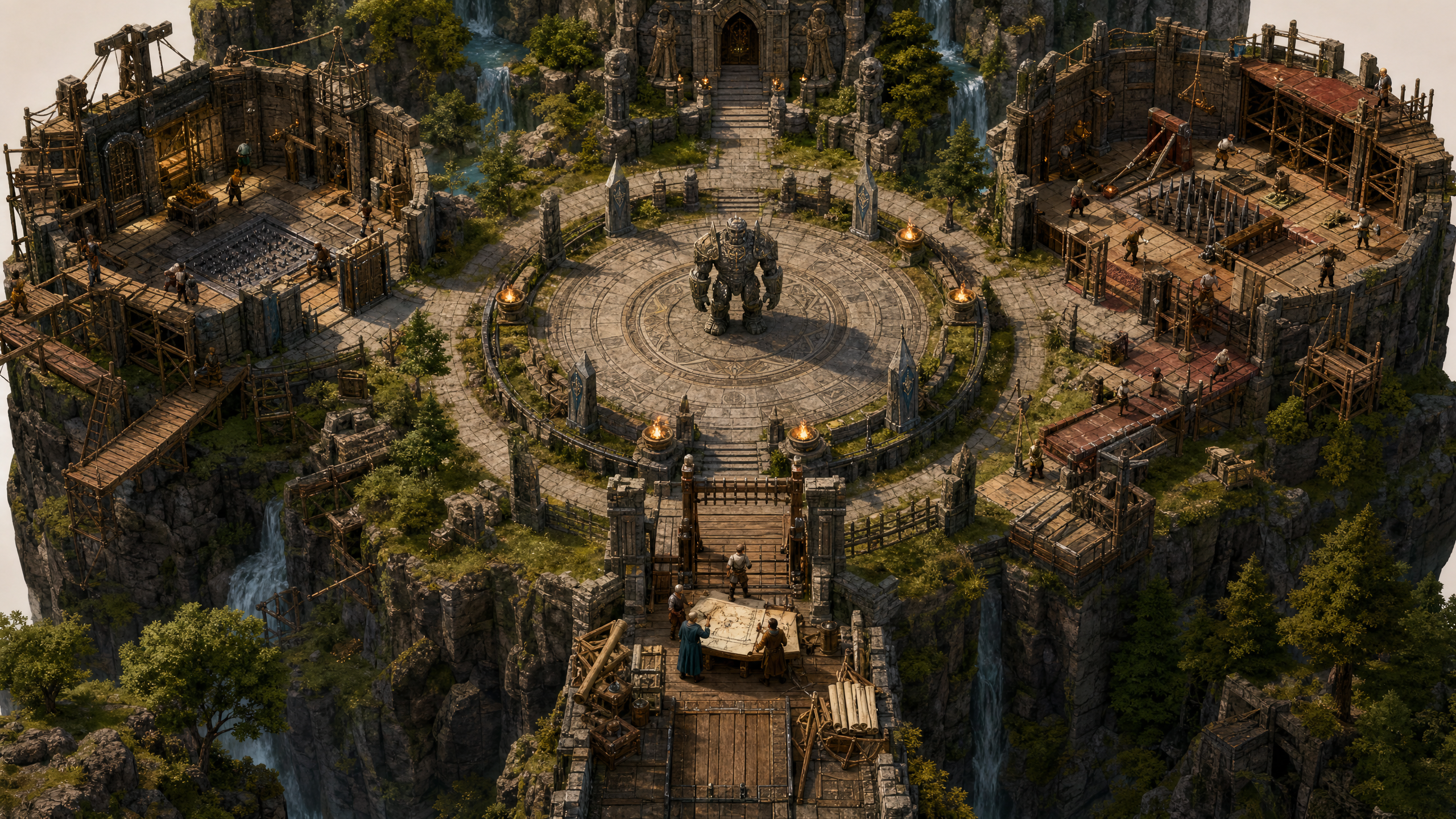
The best boundary is usually expressed as verbs, not a broad promise. Players may build, remix, decorate, challenge, or schedule. They may not rewrite the economy, impersonate official content, or change the competitive rules. Clear verbs turn creativity into a feature the studio can support.
Real Players Break Comfortable Assumptions
Community also earns its place by making the team less certain. Wooga UX lead Holger Wurst says June’s Journey players in their 60s and 70s regularly outsmart the development team. One focus-group participant arrived with a tablet, a phone, and a written list of questions about the game’s economy that she understood better than he did.[3]
Those players also learn the game’s interface as a map. Move an object or rename it and a seemingly harmless refresh can feel like a bug. Fan wikis and clubs build routines around the current flow. Reliability becomes part of the product, even when it never appeared in a design document.[3]
Wurst estimates that AI helps his team produce prototypes about 70% faster, but rejects the idea that a synthetic player can replace research with people. That is the right dividing line. Faster prototypes increase the number of questions a team can ask. They do not make the answers less human.
Community research should find the rules players have learned that the team no longer sees. Ask what they teach new members, which workarounds they depend on, and what they would lose if a feature disappeared. Those answers are often more useful than a ranked feature-request list.
Feedback Is Evidence, Not a Vote
Naavik’s interview with solo browser-game developer Abe Train shows the necessary counterweight. Train invites players into Discord from every game, watches bug reports closely, and starts gathering feedback as soon as the game loop is playable. He also keeps ownership of the roadmap.[4]
His example is difficulty. Players often ask for a game to become easier, he says, but rarely ask for more challenge. Following every request would slowly remove the thing that brings them back. The request still matters; it may reveal friction, poor explanation, or an unfair spike. It is evidence of a problem, not a vote for the solution.
The same judgment applies to bug reports. A game team should not wait for volume before investigating a credible obstacle: one person who reports a problem may stand in for many who simply stop playing. Silent churn is still a response.
The full Naavik conversation covers how Train balances player feedback, ads, subscriptions, creator attention, and direct community contact:
Watch What Players Repeat
Sometimes the clearest community signal is not a comment. It is repeated behaviour. GameRefinery traced how Toon Blast ran its Cannon Fest side event almost every week from November 2024. A standalone interpretation appeared near the end of 2025; after it began scaling in June 2026, competing games arrived within one to two weeks, and more than 30 developers shipped versions that summer.[5]
That does not prove every studio should clone a cannon mechanic. It shows what strong evidence looks like: players understood the action without a tutorial, the destruction was the reward, failure felt readable, and the event kept earning a place in a top-grossing game. Long-running behaviour made the opportunity visible before other developers copied it.
In the Cannon Fest case, weekly repetition is the product-analytics signal; community discussion can help explain why players keep choosing it. Retention, repeat participation, creation rates, shares, and successful peer teaching show whether the behaviour persists. Neither words nor data are complete alone.
Build the Community Loop Into Live Ops
A practical game community growth loop does not require a large team. It requires clear ownership and a recurring decision point:
- Name the player action: teach, create, validate, challenge, or return.
- Give it a product home: a share flow, creation tool, test group, club feature, or supported creator programme.
- Set boundaries: define what players can change and what remains part of the shared game.
- Pair words with behaviour: review requests beside what players repeat, abandon, explain, and share.
- Close the loop: tell players what changed, what did not, and why.
This extends AC&A’s earlier argument that great mobile games are managed as habits, not hits. Community can strengthen those habits, but only when it connects to the reasons people return. It also depends on the trust described in Game Platforms Grow Only When People Trust the Rules: creation and influence need boundaries players can understand.
The goal is not to make every player a designer. It is to make player expertise useful. A community grows a game when people can do more than watch the studio speak—and when the studio is prepared to learn without surrendering judgment.
Sources
- PocketGamer.biz: Why community is becoming a growth engine for mobile games
- PocketGamer.biz: Orio CEO Volha Paulovich on the rise of UGC and player creativity
- PocketGamer.biz: Wooga’s Holger Wurst on designing June’s Journey
- Naavik: The Solo Developer Making Seven Figures From Free Browser Games
- GameRefinery: How a Toon Blast side-event became its own genre